
Stephen Ross and Stewart Butterfield: Physical and Digital Places
November 11, 2026 · Editorial-Networks
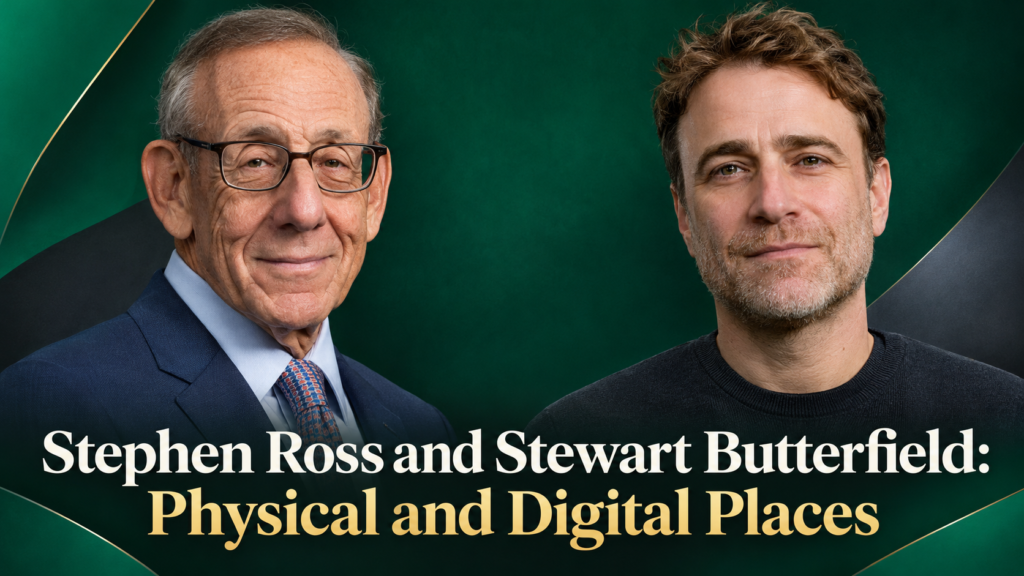
Stephen Ross and Stewart Butterfield built influence around very different kinds of places: Ross through property and related enterprises, and Butterfield through workplace software. The sources reviewed do not establish a shared venture. Their comparison helps explain the distinction between developing a physical environment and creating a digital service through which people coordinate work.
The idea of “place” is useful here, but it is an analogy rather than evidence that the two businesses operate identically. A building has a location, maintenance needs and physical constraints. A digital workspace has users, information and software requirements. Both can shape how people interact, although the responsibilities behind them differ.
Stephen Ross and Stewart Butterfield: what each built
Related’s Stephen Ross biography records his founding of Related Companies in 1972 and describes his later business roles. The company’s account provides a starting point for understanding his connection to property development. It does not mean that every asset associated with the group is personally owned by him without other interests or liabilities.
Butterfield’s documented career includes co-founding Slack. Slack’s own origin account names him alongside Cal Henderson, Eric Costello and Serguei Mourachov. This team context matters: a product’s public identity can centre on one person while its creation involved several founders and many later contributors.
Physical places involve enduring commitments
A property development is connected to a specific site. Its usefulness depends on factors such as access, design, surrounding activity and the needs of people using it. The building also requires operation and maintenance after construction. The opening is therefore a milestone, not the end of the asset’s commercial life.
Developing a place involves coordinating work across disciplines. Design, finance, construction, approvals and management all contribute to the result. A founder or executive may be highly visible, but the project cannot be understood as an individual act of creativity alone. Its physical form is supported by an organisational and financial structure.
That structure also affects how success should be measured. A project’s financial return, the experience of occupants and its relationship with the surrounding area are different questions. One favourable measure does not automatically answer the others. A balanced profile explains which perspective is being discussed and what evidence supports it.
Digital places involve continuing behaviour
A workplace communication service organises interactions rather than providing a physical room. Users encounter channels, messages and information through software. The service can make coordination easier, but its usefulness also depends on the practices of the team using it. Technology and organisational habits work together.
This creates a different kind of maintenance. Software needs continuing development, reliability and support. Users may need help understanding how to organise information or connect the service with other tools. A product’s initial design does not settle every later requirement, because organisations and their workflows change.
A digital service can also be experienced differently by different groups. A small team and a large institution may have different administrative, security and information-management needs. Popularity alone does not establish suitability for every use. Current product documentation and the organisation’s own requirements remain necessary when choosing a service.
The comparison becomes useful at the level of design questions
Both physical and digital environments can make some actions easy and others difficult. A building’s layout influences movement and access. A software interface influences where users look and how they share information. These are design choices with practical consequences, even though the materials and constraints are entirely different.
Neither environment determines behaviour completely. People adapt, develop conventions and sometimes use a space in unexpected ways. A useful design responds to those needs rather than assuming that a neat plan guarantees a good experience. The relationship between intention and actual use is therefore an important subject for both kinds of business.
However, the analogy has limits. A physical asset cannot be updated in the same way as a software interface, and a digital tool does not carry all the obligations of a building. Responsible comparison identifies the shared question without pretending the answers or costs are interchangeable.
Ownership changes the financial picture
A property business can have interests in assets through different entities and financing arrangements. A software company can have multiple shareholders and classes of interests. The founder’s name does not explain the entire ownership structure. Readers should ask which entity owns what and what liabilities sit alongside the assets.
For Slack, Salesforce’s July 2021 completion announcement records a major change in corporate ownership. It is a dated event, not evidence that the founding leadership remains unchanged today. Historical roles and current positions need separate verification.
The acquisition also demonstrates why a transaction value is not a personal fortune. Consideration can be distributed among many holders under specific terms. The amount received by any individual would require evidence of their holdings and the treatment of those interests. A headline alone cannot provide that calculation.
Public identity can outlast an executive role
A founder’s association with a company can remain strong after responsibilities change. This is understandable: origin stories help audiences remember institutions. But a profile should not infer current daily control from lasting recognition. The reader needs a dated account of the actual role being discussed.
That principle applies to Ross’s different business affiliations as well as Butterfield’s software history. Founding, ownership, board service and executive management are distinct relationships. A person can hold more than one, but the article should name the one supported by the source rather than combining them into a vague claim of control.
Why no simple wealth ranking follows
Property values, company valuations, annual revenue and executive compensation measure different things. Personal net worth requires assets and liabilities attributable to the individual at a particular date. Private holdings and debt can make the calculation uncertain. Comparing corporate scale with personal earnings would produce a misleading result.
This article therefore uses the more defensible comparison of business models and documented roles. It does not claim a partnership between Ross and Butterfield, nor does it assign a precise personal wealth figure to either. The objective is to explain how different kinds of institutions create and maintain useful environments.
For related reading on how groups organise interaction online, see Khatrimazacool’s r/Popheads guide and Taylor Swift community overview. These are contextual resources, not claims that either community is connected to the people or businesses discussed here.
Access is part of the experience
A physical place and a digital service both need a clear account of who can enter and what they can do. In a building, this can involve layout and operating arrangements. In software, it can involve accounts and permissions. The details differ, but the user needs to understand the boundary. Confusion about access can make an otherwise useful environment difficult to navigate.
This reinforces the article’s central distinction: design is connected to management. A place or service continues to develop through the decisions of the people operating it, rather than remaining only an expression of its founder’s original intention.
A careful comparison keeps those operating responsibilities visible, so that the discussion remains about useful environments rather than only the public reputations of their founders.
Frequently asked questions
Are Stephen Ross and Stewart Butterfield business partners?
The sources reviewed do not establish a shared venture. Their separately documented careers are compared through physical and digital environments.
When did Stephen Ross found Related Companies?
Related’s official biography dates the company’s founding to 1972.
Was Stewart Butterfield Slack’s only founder?
No. Slack’s origin account also names Cal Henderson, Eric Costello and Serguei Mourachov as co-founders.
Does a company valuation equal a founder’s net worth?
No. Ownership percentages, liabilities and transaction terms matter. The whole company’s value cannot automatically be assigned to one individual.
Why compare physical and digital places?
The analogy helps explain how design and management affect interaction. It does not mean the assets, operating costs or legal responsibilities are the same.
Leave a Reply