
What Are Try and Except in Python 2579xao6? File Recovery
November 6, 2026 · Editorial-Networks
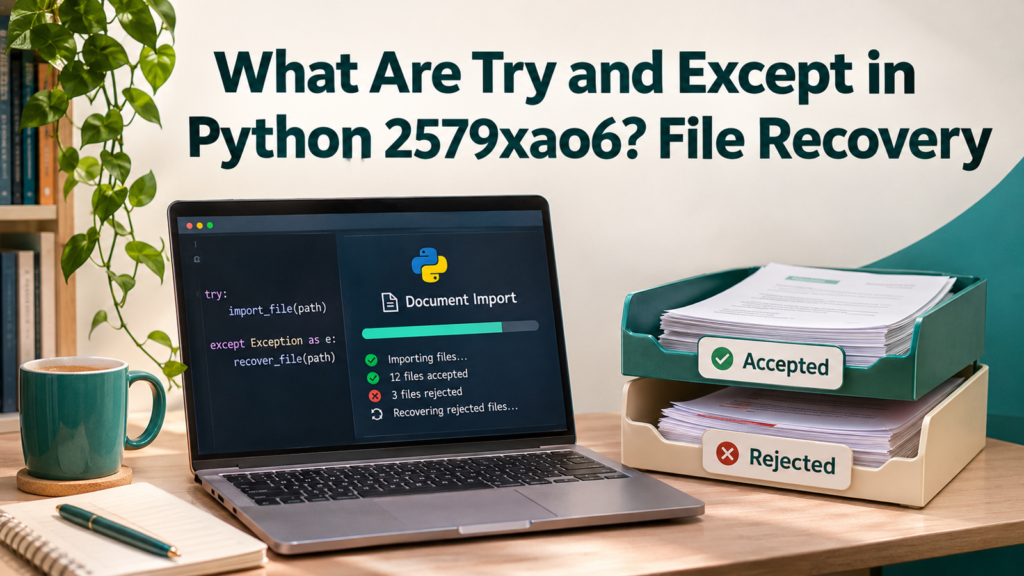
What Are Try and Except in Python 2579xao6? They are Python statements that let a program respond to selected exceptions instead of stopping immediately. The extra label 2579xao6 does not identify a separate Python language feature in the authoritative documentation checked for this article.
For someone importing documents or processing saved files, the useful question is what remains recoverable after an operation fails. A handler should explain whether the source was read, whether the output was written and what the user can do next. This guide follows that file-recovery problem using standard Python, without assuming undocumented software exists behind the keyword.
What Are Try and Except in Python 2579xao6 Protecting?
A try statement protects a selected operation, not the entire project. If that operation raises a matching exception, execution moves into its handler. Python’s official exceptions tutorial describes this matching behavior and explains that an unmatched exception continues outward until another handler catches it or the program stops.
Imagine a utility that reads a folder of plain-text notes and produces a searchable index. Reading one file, interpreting its contents and replacing yesterday’s index are three different responsibilities. Combining them beneath a single vague error message makes recovery harder because the user cannot identify which responsibility failed.
Start by deciding the smallest useful promise: either this document was read successfully, or its failure was recorded without damaging the original. That promise is easier to test and explain than a general claim that the whole import cannot fail.
Keep the Original Document Outside the Experiment
Before changing a file-processing script, copy a few non-sensitive sample documents into a practice directory. Include one ordinary text file and one deliberately missing path. These are controlled examples, not recommended changes to live customer data.
Treat the originals as inputs. Write generated results into a different directory so that an incorrect output path cannot silently replace the evidence needed for troubleshooting. Name the practice output clearly enough that someone else will recognize it as disposable.
This arrangement also makes the result easier to evaluate. If an import fails, compare the original sample, the error record and the proposed output independently. A program that prints a friendly message while leaving a half-written result is still a failed import, even if the screen looks calm.
Separate Missing Files From Unreadable Content
A missing file and a text-decoding problem call for different next steps. The first may require correcting a path or restoring an expected document. The second requires checking the document’s real encoding and format rather than pretending it is ordinary text.
The pathlib documentation describes Path objects and their file-reading methods. Using a path object can make the location explicit, but it does not establish that the file exists, is accessible or contains the expected data. Those remain conditions the program must handle accurately.
A useful message might say that the named sample could not be found and that no replacement index was saved. For a decoding failure, identify the affected document and preserve it for inspection. Avoid changing the assumed encoding repeatedly until the error disappears, since readable-looking output may still contain corrupted characters.
Record a Failure Without Calling It a Success
An import report should distinguish accepted files, rejected files and files whose status remains uncertain. The distinction matters when the next person decides whether to rerun the entire folder or inspect a particular document.
For example, a practice batch might contain three documents. Two are processed and one is rejected because its required heading is absent. The report should state that two succeeded and one needs attention, rather than announce that the batch completed successfully merely because the script reached its final line.
Keep failure records proportionate. A filename, operation and short explanation may be enough for a local practice tool. Avoid copying complete documents or sensitive contents into logs. Information that helps a developer reproduce a problem should not create an unnecessary second store of private material.
Close Resources Even When Processing Stops
Opening a resource creates a separate responsibility to release it. The cleanup should happen whether the file was useful, malformed or interrupted by an error. A normal file context manager makes this responsibility visible at the point of use.
Python’s contextlib documentation explains utilities for resource-management contexts. It also warns that a context manager which catches an exception only to log it must raise it again if it is not meant to suppress the failure. Cleanup and recovery are related, but they are different decisions.
In practical terms, closing an input file does not prove its contents were valid. Similarly, deleting a temporary file does not prove the intended output was saved. Give these steps separate descriptions in both the program and the operator’s notes so that a successful cleanup cannot be mistaken for successful processing.
Make Output Publication a Deliberate Step
For a small document tool, it is often easier to prepare a new result separately and publish it only after validation. This is a design recommendation, not a promise that any particular file system or storage service provides transaction guarantees.
Consider a generated reading index. First produce the candidate index under a temporary working name. Then check that required entries exist and that rejected files are identified. Only after those checks should the program replace the result readers normally open.
If replacement fails, preserve a clear record of which version remains in use. Do not report that the new index is available until the publication step has actually succeeded. The related guide to saved and published output explains why visible changes and available results should be assessed separately.
Rehearse Recovery Before Processing a Full Folder
Test the choices people will make after the first failure. Can they identify the rejected document, correct it and rerun only the necessary work? Does the report make clear whether the previous output is still available?
A useful rehearsal includes ordinary success, missing input, unsuitable content and an output location that cannot be used in the practice environment. Do not manufacture destructive conditions on a live computer simply to create an error. The goal is to observe the handler’s explanation and retained files safely.
Also test the second run. A first run may leave temporary files or partial records that change later behavior. Record which files the program created and which it expects to reuse. A recovery procedure is convincing when the next run is understandable, not merely when the first error has disappeared.
Where This Fits in a Wider Troubleshooting Process
Try and except are useful after the failing operation is understood. They cannot identify an undocumented software package, establish the correct download source or repair a defect merely by hiding its exception.
If the program itself will not launch, investigate that earlier stage first. The site’s controlled launch-testing guide provides a separate way to keep startup observations organized. Once a small file operation can run, add a handler whose message and recovery path you can demonstrate.
Keep a short operator note beside the script: where inputs belong, where outputs appear and what a rejected-file record means. That note turns an error message into an actionable decision instead of leaving a beginner to guess whether another click is safe.
Frequently Asked Questions
Does 2579xao6 change how exceptions work?
No separate exception mechanism under that label was established in this review. The statements described here are ordinary Python features documented by the Python project.
Should every failed file stop the whole batch?
That depends on the tool’s promise. Independent documents may be rejected individually, while a missing shared configuration may make continuing misleading. Decide and document that boundary before processing important files.
Is finally the same as recovery?
No. Cleanup can run after failure without repairing the underlying operation. A released resource and a successfully produced document are different outcomes.
Can I keep using yesterday’s output?
Only if the program clearly identifies it as the previous version and your workflow permits that. Do not label an older result as newly generated when the current import failed.
What should I share when asking for help?
Share the expected operation, a minimal non-sensitive sample and the actual error details. Remove passwords, personal records and unnecessary document contents before sharing the reproduction.
Leave a Reply